Introduction of Dr. Tarek Aesthetics Top Breast Augmentation Surgeons
At Dr. Tarek Aesthetics, we’ve completed tens of thousands of breast augmentation in Dubai procedures, which also means we’ve had the privilege of meeting tens of thousands of women just like you. We know that finding reliable, transparent information can often be the hardest part of the journey. Deciding whether this procedure is right for you can feel overwhelming at times.
With that in mind, we wanted to offer some candid insights from our board-certified plastic surgeons, along with the latest resources and our top tips, tricks, and guidance for a smooth, stress-free experience. Together, we’ll guide you through everything you need to know—no complicated jargon, no sales tactics, and no pressure. We’re excited to support you on your journey to feeling your best. Here is an excellent guide to breast augmentation.
Breast Augmentation Common Misconceptions
Here are some common myths about breast augmentation surgery in Dubai —busted.
- Breast implants must be replaced every ten years. This is FALSE. If your implants aren’t causing any issues, there’s no need to replace them. The most common reason for an implant exchange is when a patient chooses to change their size, either larger or smaller.
- Saline implants are safer than silicone. This is FALSE. While silicone implants were temporarily removed from the market in the early 1990s due to safety concerns, extensive research, including a 14-year study, has confirmed that silicone implants are safe. In fact, they are among the most thoroughly tested medical devices available.
- You can lose nipple sensation after surgery. This is TRUE. Temporary loss of nipple sensation can occur due to nerve stretching during surgery, but for most patients, sensation returns within 6 to 8 months.
- Breast augmentation Dubai will fix sagging breasts. This is FALSE. Adding an implant to a sagging breast simply results in a larger sagging breast. A breast lift, with or without implants, is the only procedure that can restore the breast to its previous position.
- You can’t breastfeed after implants. This is FALSE. In most cases, breast augmentation does not interfere with the glandular tissue where milk ducts are located, allowing breastfeeding to remain possible.
- Bigger isn’t always better. This is TRUE. Your implant size will affect your body for many years, so it’s important to consider how you’ll feel as your lifestyle and body change. Your surgeon will guide you in choosing the best size for your body type and help you to visualize your results.
Most Frequently Asked Questions About Breast Implant Surgery
How long do breast implants last?
Our patients often ask whether their results will last a lifetime. While breast implants are not automatically considered lifetime, those inserted by the best breast implants surgeon in Dubai can last for many years in some cases. Earlier versions of implants were more prone to complications, which is why the recommendation to have them checked every ten years originated.
Book A Consultation With Dr Tarek Bayazid
Top-rated Plastic Surgeon For Breast Augmentation in Dubai


Installment Plan Available
However, that guidance applied to first- and second-generation implants. Today, we’re using fifth-generation breast implant technology, which has been shown to be extremely safe and far less likely to rupture or fail.
We still advise patients to visit their surgeons every few years to ensure their implants remain in good condition and to check for any signs of rupture. This is especially important after experiencing any bodily trauma, such as a car accident.
When no symptoms are present and routine check-ups show no concerns, most women with breast implants have little reason to worry. With proper care and ongoing follow-up, implants can last for many years and, in some cases, a lifetime. This allows patients to confidently ask how long breast implants last, knowing that with attention, self-awareness, and guidance from the best breast augmentation surgeon in Dubai, long-term results are both achievable and reassuring.
Will I be able to breastfeed with implants?
Many moms or moms-to-be often wonder how breast implants might affect their ability to nurse.
The first thing to understand is that not every woman is able to breastfeed, and there’s no reliable “test” to predict whether a first-time mother will succeed. As a result, any breastfeeding challenges may have nothing to do with implants.
That said, it’s highly unlikely that getting breast implants will interfere with a woman’s ability to nurse. In fact, a recent clinical study involving over 4,500 women who gave birth to more than 5,500 children after primary breast augmentation found that 80 percent of women with silicone implants and 75.9 percent with saline implants were able to breastfeed their infants without complications.
Moreover, the rate of lactation difficulties in the study was similar to that reported among the general population of breastfeeding women, showing that implants do not play a significant role in a woman’s ability to nurse.
What can I do to ensure my breast implant surgery goes as smoothly as possible?
The first step is to make sure you choose a reputable breast plastic surgeon—someone who will take the time to guide you through every aspect of pre-op preparation, post-op recovery, and ongoing breast care.
Once you’ve found a qualified surgeon near you, be sure to spend ample time in consultation and set clear expectations. It’s essential that both you and your surgeon are aligned on your desired results.
At Dr. Tarek Aesthetics, we place a strong emphasis on open, consistent communication with our patients. We always take the time to get to know you before the procedure, ensuring that we share the same goals and have a mutual understanding of the expected outcome.
During your consultation, we encourage you to ask any additional questions that haven’t been addressed here. We’re always happy to provide clarity. Connect with Dr. Tarek Aesthetics today to learn more about what to expect from Best breast augmentation Dubai.
Does Having Implants Change the Way I Care for My Breasts?
According to many of the best breast surgeons in Dubai, the short answer is yes—breast implants do change how you care for your breasts over time. Patients with implants typically need a few additional screenings beyond regular self-exams and routine breast checks. It’s also recommended to visit your plastic surgeon every few years so they can monitor the implants and check for potential issues such as rupture or capsular contracture, ensuring long-term safety and optimal results. Additionally, during mammograms, patients will need extra displacement images, called Eklund views, in which the implant is gently moved back.
It’s important to understand that these additional screenings aren’t because the risk of breast cancer is higher—they’re simply a precaution. Like any surgical procedure, regular follow-up care is recommended. In fact, having these extra exams can be a hidden benefit of breast augmentation, ensuring more consistent monitoring and increasing the likelihood of early detection if cancer is present.
There are some practical considerations for women with implants. For example, when scheduling a mammogram, it’s wise to inform your doctor that you have implants and request a technologist experienced in performing mammograms on women with implants. Be sure to remind them again when you arrive for your appointment.
Implants can make it slightly more challenging to obtain clear images, so women with implants may have a few extra pictures taken—typically two additional photos per breast.
Finally, some women searching for boob job surgery near me often ask whether mammograms can cause breast implants to rupture. While this was a minor concern with older implant designs, modern implant technology has advanced significantly. Today’s breast implants are durable and designed to withstand the pressure of routine mammograms, making the risk of rupture extremely low. It’s still important to inform your imaging technician about your implants so proper techniques can be used for safe and accurate screening.
Who is a good candidate for breast augmentation?
A good candidate is someone in good overall health, not pregnant or breastfeeding, with fully developed breasts, and realistic expectations about the results.
What types of breast implants are available?
The most common options are silicone and saline implants. Each type has its own benefits, and your surgeon will help you choose based on your body type and goals.
How long is the recovery after breast augmentation?
Most patients return to light activities within a few days, resume work in about a week, and gradually return to exercise over several weeks as advised by their surgeon.
Are breast implants safe?
Yes, modern breast implants are extensively tested and considered safe. Choosing a board-certified plastic surgeon and attending follow-up appointments are key to long-term safety.
Will my breasts look fake after breast augmentation?
When performed by an experienced surgeon using the right implant size, shape, and placement, breast augmentation can look very natural. Your body proportions, skin quality, and aesthetic goals are carefully considered to achieve balanced results. As swelling subsides and implants settle, the breasts usually soften and take on a more natural appearance.
Why Choose Breast Augmentation Surgery?
There are many reasons why women choose to have breast surgery Dubai. When women have children, lose weight, or as they age naturally, they often notice that their breasts have lost shape and volume.
Do I Need a Breast Lift or Breast Augmentation?
In many ways, the question comes down to volume and shape—two key factors in evaluating the health and appearance of your breasts.
Ask yourself: Are you satisfied with your current breast volume? Is your main concern that your breasts aren’t in the right position? If so, this usually indicates that a breast lift may be the right option.
If your breasts aren’t in the ideal position and you also wish they were a bit larger, you may be a good candidate for both augmentation and a lift.
Lastly, if you like the shape of your breasts but have lost volume, breast augmentation alone is often the solution. This is particularly common for moms who have experienced volume loss due to breastfeeding. (Be sure to ask us about our Mommy Makeover procedure options!)
Whether your breasts have sufficient volume can be somewhat subjective, but a consultation with a plastic surgeon can help you determine whether your breasts are where you want them to be.
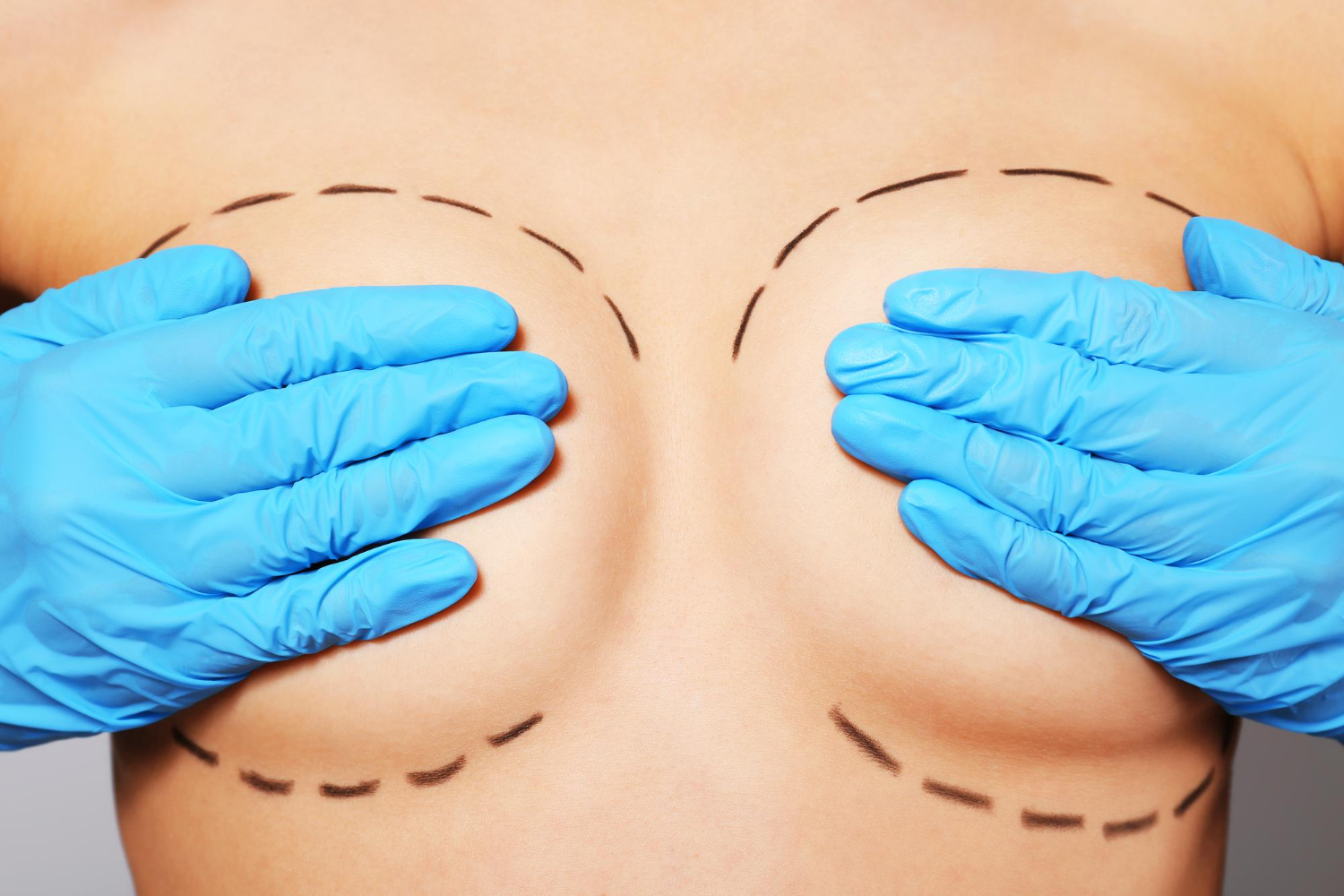
Now, what about breast placement? As a general guideline, an attractive breast typically has the nipple at the apex of the breast mound, at the point where the breast peaks. It’s also important to evaluate the nipple’s position relative to the breast fold. If the nipple sits above the fold, a lift is rarely necessary.
However, if the nipple rests below the breast fold, a breast lift is usually needed to restore the breast to its proper shape—whether or not you also choose augmentation.
Finally, it’s important to understand the difference between a breast reduction and a breast lift, as the two procedures address different concerns.
Saline Breast Implants: Weighing your options
Advantages:
- Saline breast implants require a smaller incision.
- They generally cost less than silicone breast implants.
- There is greater flexibility in size because the volume of saline inside the implant can be adjusted.
- If a rupture occurs, it’s easy to detect because the implant goes flat.
- The filler is simply saltwater (saline), which can be safely absorbed by the body in the event of a rupture.
Disadvantages:
- Saline implants tend to feel firmer and may sometimes look and feel less natural than silicone implants.
- They can create ripples or jiggling due to the “water balloon” nature of the implant.
- Unless you have a significant amount of natural breast tissue, under-the-muscle placement may be necessary; otherwise, the implants may be more visible, making it obvious that you have implants.
Fun Fact: Saline breast implants were first introduced in 1965 as an alternative to silicone implants. They have the same outer shell as silicone implants but are filled with saline (saltwater) solution.
There are several types of breast implants available—let’s take a closer look at your options.
Silicone Breast Implants: Weighing your options
Advantages:
- Silicone breast implants look and feel softer and more natural than saline implants.
- They offer more profile options than saline implants, allowing you to customize the amount of upper-pole fullness (cleavage) you desire.
- Silicone implants are less prone to rippling compared with saline implants.
- Their soft consistency makes them easier to place above the muscle (sub-glandular).
Disadvantages:
- Detecting a rupture can be more difficult because the cohesive gel tends to stick together and often remains inside the implant shell and breast pocket.
- Silicone implants require a slightly longer incision.
Fun Fact: Terms like “gummy bear,” “cohesive gel,” “form-stable,” “memory gel,” and “responsive gel” are primarily marketing labels with no strict scientific definition. They describe the silicone’s ability to maintain its shape, even if the implant is cut in half or ruptured.
Breast Implant Shape: Round or Anatomical
For many years, round breast implants were the only option available to patients. Today, however, patients can also choose a shaped or anatomical implant, featuring a teardrop contour that is narrower at the top and fuller at the bottom. A patient might select an anatomical implant if:
- She prefers minimal fullness at the top of the breast.
- She has a very petite frame, limited breast tissue, and desires a teardrop-shaped appearance.
- She has a breast deformity or asymmetry that could benefit from the contours of a shaped implant.
A shaped implant provides less projection at the top of the breast, so women seeking more upper-pole fullness or enhanced cleavage may be better suited for a round implant.
Interestingly, multiple studies have shown that breast augmentation surgeons often cannot distinguish whether a patient has a round or anatomical implant. This is likely because a round implant naturally assumes a teardrop shape when a woman is standing upright.
Breast Implant Surface: Smooth or Textured
The skin of breast implants can be smooth or rough, like sandpaper. Capsular contracture is when scar tissue forms around the implant. At first, it was thought that giving breast implants structure would lower the risk of this happening. But this hasn’t been completely proven in the lab. The texture does, however, help the breast implant stick to the flesh around it and keep it from moving or rotating. This is especially helpful for teardrop-shaped implants, since round implants look the same no matter which way they are turned inside the pocket.
If a patient picks a teardrop or anatomically-shaped breast implant, she may also pick a smooth implant.
Breast Implant Placement: submuscular or sub-glandular (also known as “under the muscle” or “over the muscle”)
Breast implants can be placed either under the pectoralis muscle or on top of the muscle beneath the breast tissue. Which placement is best for you depends on several factors.
SUBMUSCULAR — under-the-muscle placement provides more tissue coverage over the implant. You may consider this option if:
- You have a small amount of natural breast tissue and want more coverage to make the implant less visible.
- You are choosing a saline implant.
With submuscular placement, there is typically less rippling because more tissue covers the implant.
The potential downsides include implant “animation,” meaning the implant may move or distort when flexing the pectoralis muscle. This may not be ideal if you are an athlete or competitive bodybuilder. Recovery can also be slightly more uncomfortable, possibly requiring an extra day or two.
SUB-GLANDULAR — over-the-muscle placement is often considered if you have sufficient natural breast tissue or are choosing a silicone implant.
Since silicone implants are softer and don’t require as much coverage to look natural, many patients prefer this placement with silicone implants. Sub-glandular placement avoids muscle distortion or animation, and recovery tends to be shorter and less painful. This placement can also be a good option for saline implants if you have enough breast tissue to provide coverage.
The potential downsides include a higher chance of rippling and, for saline implants, the possibility that the upper portion of the implant may be more visible.
Pro Tip: Regardless of whether implants are placed sub-glandular or submuscular, it’s important to inform your technician during mammograms or breast ultrasounds. This allows them to take specialized imaging views that improve the chances of detecting breast cancer. With modern radiology techniques, both mammography and ultrasound are highly accurate and can effectively image the breast no matter how your implants are positioned.
Visualizing your result: Vectra 3D Imaging Technology
Do you find yourself thinking a lot about how you’ll look after breast augmentation? Do you wish you could “try on” your new implants before surgery? Now, you can.
The Vectra 3D imaging system uses ultra-high-resolution cameras to capture detailed images of your breasts and torso, which are then transformed into a realistic 3D avatar. Using advanced computer software, you can virtually “try on” different implant shapes, sizes, and styles to see how they would appear on your body.
The Vectra is highly accurate—an independent study conducted here at Dr. Tarek Aesthetics found that Vectra simulations were over 90% accurate compared to patients’ actual post-surgical results.
Preparing for Your Breast Augmentation Consultation
Now that you have a clearer understanding of your breast augmentation options, the next step is to meet with a board-certified breast augmentation plastic surgeon to determine if surgery is right for you. Because there’s no “one-size-fits-all” approach, it’s important to come to your consultation prepared with the tools to make the best decision for yourself. Our expert recommendations include:
- Write Down Your Questions – You’ll be covering a lot of information with your surgeon, so make sure nothing gets forgotten.
- Outline Your Goals and Concerns – Jot down what you hope to achieve and any worries you may have so everything is addressed during your consultation.
- Plan for Recovery – Keep in mind that heavy lifting may be restricted for a few weeks and you’ll need someone to drive you home after surgery. Arrange for a trusted friend or family member to assist you during your breast augmentation recovery.
- Review Before & After Photos – Bringing examples of results you like—such as images from online sources or magazines—can help clearly communicate your aesthetic goals and expectations.
- Check Your Calendar – Surgeons’ schedules can be booked several weeks in advance, so come prepared with multiple timeframes that could work for your surgery over the next several weeks.